
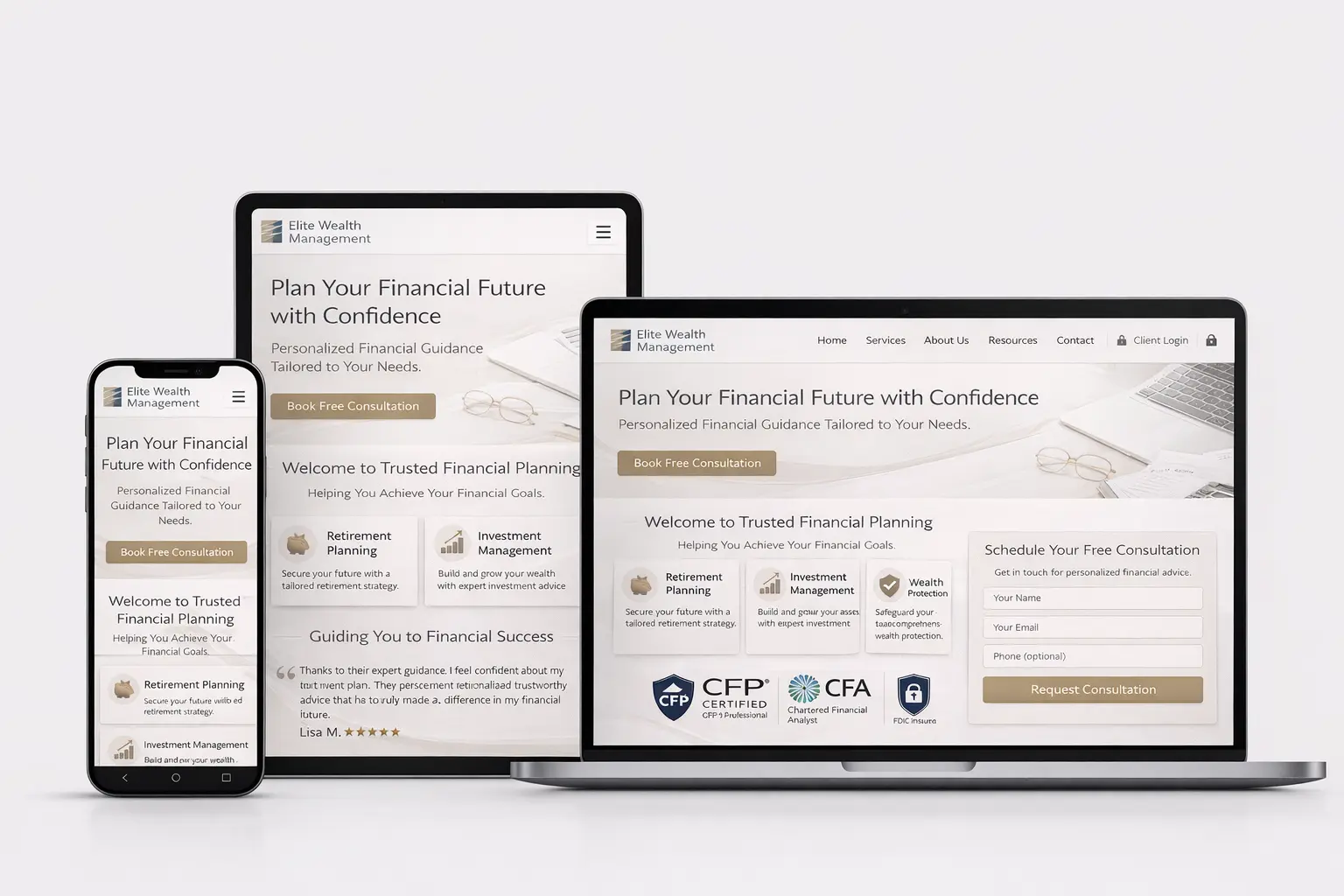
Money is emotional. When a potential client visits your website, they aren’t just looking for a list of services or a biography of your team. They are looking for safety, competence, and a reason to trust you with their future.
For financial advisors and firms, a website serves as the digital front door. It is often the very first interaction a prospect has with your brand. If the design feels outdated, cluttered, or difficult to navigate, that prospect may assume your financial management style is equally disorganized. Conversely, a polished, professional digital presence signals stability and expertise.
Trust and credibility are the currencies of the financial industry. While referrals remain a powerful growth engine, the modern referral usually validates their recommendation by Googling you immediately. If your digital presence doesn’t match the glowing review they received from a friend, doubt creeps in.
This guide explores the essential components of high-performing websites for the financial sector. We will cover specific design strategies that build authority, compliance considerations unique to the industry, and how to turn passive visitors into qualified leads.
Web Design for Financial Services
Building a digital presence for a wealth management firm or independent advisor requires a different approach than building a site for an e-commerce store or a creative agency. The stakes are higher, and the regulatory environment is stricter.
Why Finance Websites Need Specialized Design
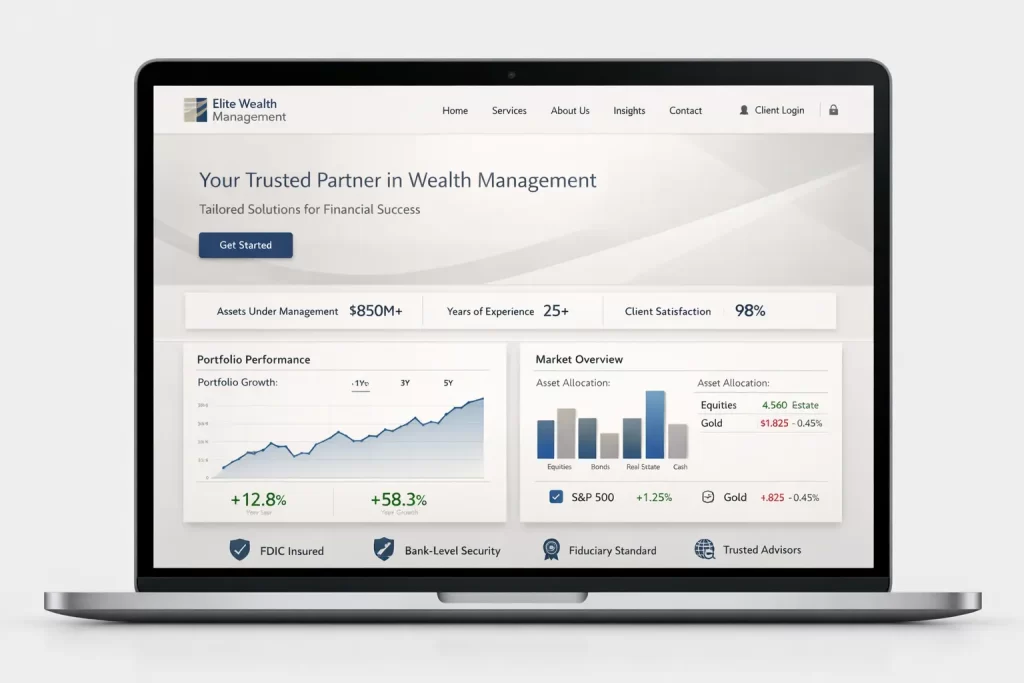
Finance is an intangible service. Clients cannot touch or hold the investment advice you provide. Therefore, your website must make the intangible feel tangible and secure. Generic templates often fail to capture the gravitas required for wealth management. Specialized website design for financial services focuses on psychology as much as aesthetics. It prioritizes clarity over flashiness and security over trends.
Furthermore, compliance is a non-negotiable factor. Financial Industry Regulatory Authority (FINRA) and Securities and Exchange Commission (SEC) regulations dictate what can and cannot be said. A specialized design approach ensures that disclaimers are present but not intrusive, and that archiving capabilities are built into the site’s infrastructure.
Core Goals of Website Design for Financial Services
A successful financial website must achieve three distinct goals simultaneously:
- Validation: It must confirm that you are who you say you are. It validates your location, your credentials, and your team’s expertise.
- Education: It should demonstrate your philosophy. Whether you believe in passive investing, active management, or holistic planning, your site must educate the prospect on how you think.
- Conversion: It needs to provide a low-friction path for a prospect to engage, whether that is downloading a whitepaper or booking a discovery call.
Essential Features for Financial Firms
To achieve these goals, certain features are non-negotiable.
Secure Layout
Security is paramount. If your website displays a “Not Secure” warning in the browser bar because it lacks an SSL certificate, you have likely lost the client before they even read your headline. Beyond technical security, the layout should feel open and organized, utilizing white space to prevent the user from feeling overwhelmed by data.
Trust-Building Design
Stock photography is the enemy of trust. High-performing sites utilize professional, custom photography of the actual office and team members. Seeing real people helps break down the barrier between a cold institution and a personal relationship.
Lead-Focused CTAs
Many firms make the mistake of having a single “Contact Us” button hidden in the footer. Effective design utilizes strategic Calls to Action (CTAs) throughout the site. These should range from low-commitment actions (like subscribing to a market commentary newsletter) to high-intent actions (like scheduling a portfolio review).
Best Financial Website
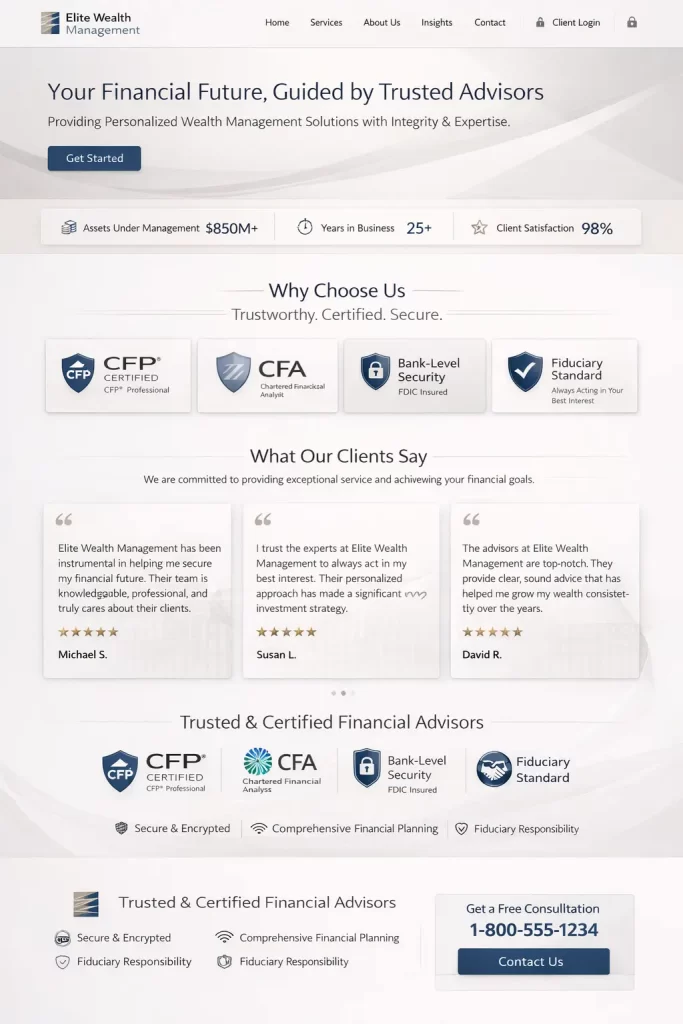
What separates a mediocre brochure site from a high-performing asset? The best websites do not just talk about the firm; they talk about the client.
What Makes the Best Financial Services Website Design?
The best financial services website design shifts the narrative from “Us” to “You.” Instead of leading with “We have 20 years of experience,” top-tier sites lead with the problems they solve for the client. They use empathy-driven copy and imagery that reflects the target demographic’s lifestyle and aspirations.
Additionally, the best sites prioritize accessibility. They ensure that text is legible for older eyes, navigation is intuitive for non-technical users, and information is structured logically.
Examples of High-Performing Financial Websites
While specific trends change, high-performing sites generally share these traits:
- The “Storybrand” Approach: The homepage clearly identifies the client as the hero and the advisor as the guide.
- Niche Focus: Rather than appealing to everyone, the best sites speak directly to a niche—such as “Financial Planning for Physicians” or “Wealth Management for Tech Executives.” This specificity instantly increases relevance and conversion rates.
- Interactive Tools: Calculators for retirement savings or tax brackets keep users engaged on the page longer, signaling to search engines that the site provides value.
Trust Elements That Increase Conversions
To convert a visitor into a lead, you must layer in social proof.
Testimonials
Following the SEC’s modern marketing rule updates, investment advisers are now permitted to use testimonials under specific conditions. Including compliant client stories or quotes can significantly boost credibility.
Certifications
Badges for CFP®, CFA®, or CPA credentials should be displayed prominently. These are quick visual shortcuts that tell the visitor you have undergone rigorous training and adhere to ethical standards.
Case Studies
Anonymized case studies are powerful tools. They describe a client’s situation (e.g., “A business owner nearing exit”), the strategy applied, and the outcome. This helps prospects see their own situation reflected in your work.
Financial Planner Web Design
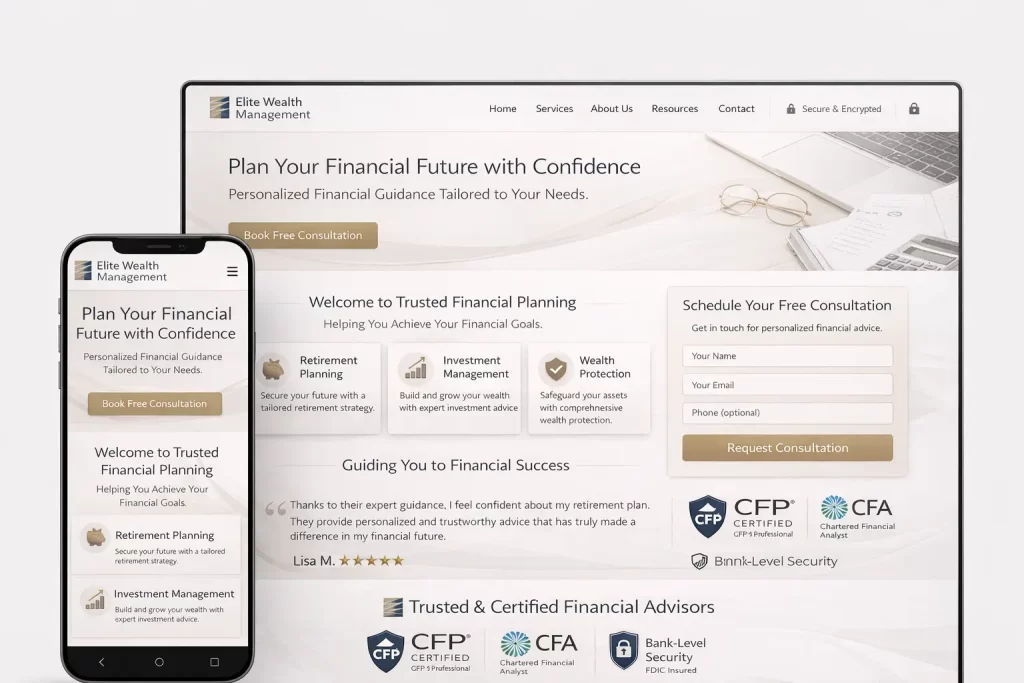
For independent financial planners, the website is often an extension of their personality. The relationship between a planner and a client is intimate; the design should reflect that.
Why Financial Planners Need Client-Focused Websites
When someone hires a financial planner, they are hiring a partner for life’s major milestones. If your website feels cold or corporate, it may repel clients seeking a personal connection. Financial advisor website design services often focus on “humanizing” the brand. This involves using video introductions where the planner speaks directly to the camera, explaining their “why” and their passion for helping families.
Must-Have Pages for Advisors & Firms
Beyond the standard Home and Contact pages, specific pages drive the most value:
- The “Start Here” Page: A dedicated page explaining exactly what the onboarding process looks like helps reduce anxiety about the first meeting.
- The “Who We Serve” Page: This disqualifies bad leads and attracts the right ones. If you only work with clients with $1M+ in assets, stating this (politely) saves everyone time.
- The Team Page: This is often the second most visited page. Clients want to know who is handling their money. Include personal tidbits (hobbies, community work) alongside professional bios.
Lead Generation Tools for Financial Advisors
Your website should work while you sleep. Integrating modern tools transforms a static site into a lead generation machine.
Appointment Booking
Tools like Calendly or Acuity Scheduling should be embedded directly into the site. This eliminates the back-and-forth email tag and allows a motivated prospect to lock in a time immediately.
Consultation Forms
Short, logic-based forms (like Typeform) can ask qualifying questions before a booking is made. Asking “What is your primary financial concern?” allows you to prepare for the meeting and ensures the prospect is serious.
Finance Website Design
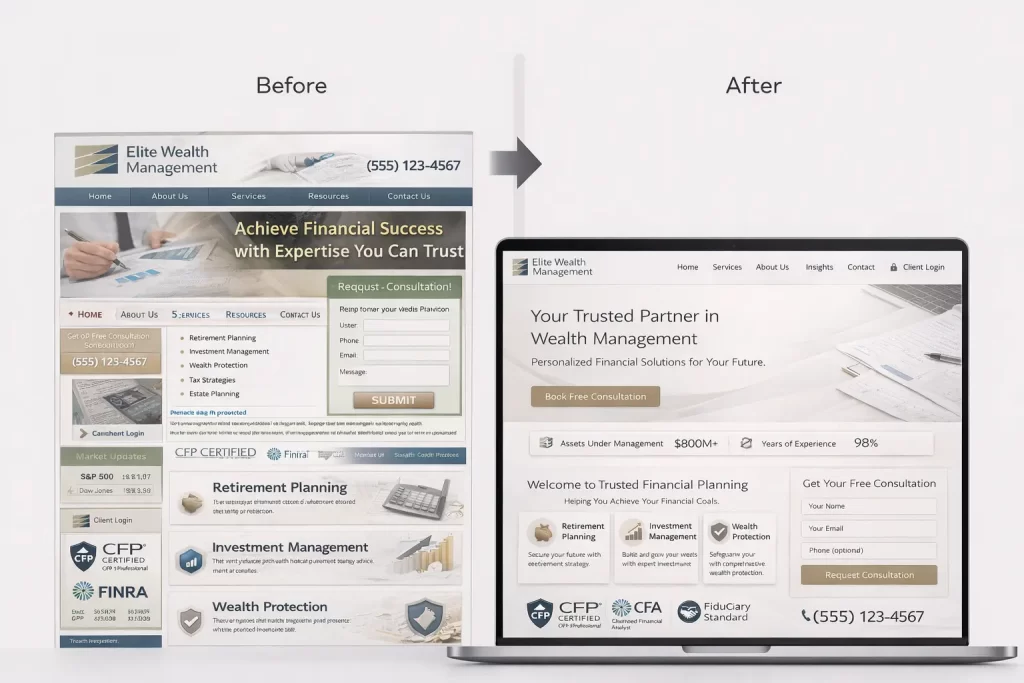
Beneath the visual layer lies the technical architecture. A beautiful site that crashes or confuses the user is worthless.
Modern UI/UX Best Practices
User Interface (UI) and User Experience (UX) are critical in keeping visitors engaged.
Mobile-First
Clients frequently check their portals or read market updates on their phones. Your site must be fully responsive. Buttons must be large enough to tap with a thumb, and text must resize for readability without zooming.
Simple Navigation
Financial sites can become content-heavy. A “mega-menu” structure can help organize services, resources, and login portals efficiently. However, the primary navigation bar should remain uncluttered, offering clear paths to the most important information.
Fast Loading
Speed is a ranking factor for Google and a trust factor for humans. A slow site implies outdated technology. Optimizing image sizes and using fast hosting ensures your site loads in under three seconds.
SEO Optimization for Finance Websites
Website design financial services must be built on a foundation of SEO. This includes technical SEO (sitemaps, schema markup) and on-page SEO.
For advisors, local SEO is particularly vital. Optimizing for “Financial Advisor in [City Name]” ensures you appear in the “Map Pack” when local prospects search. Additionally, creating a content hub or blog that answers common financial questions establishes authority and captures long-tail search traffic.
Security & Compliance Essentials
Your website requires robust defense mechanisms. This includes enterprise-grade firewalls and regular malware scanning. From a compliance standpoint, you must ensure that your privacy policy is up to date and that any data collection forms are GDPR or CCPA compliant, depending on your location. Furthermore, all website changes and content updates should be archived in accordance with regulatory record-keeping requirements.
When Financial Firms Should Consider a Website Redesign
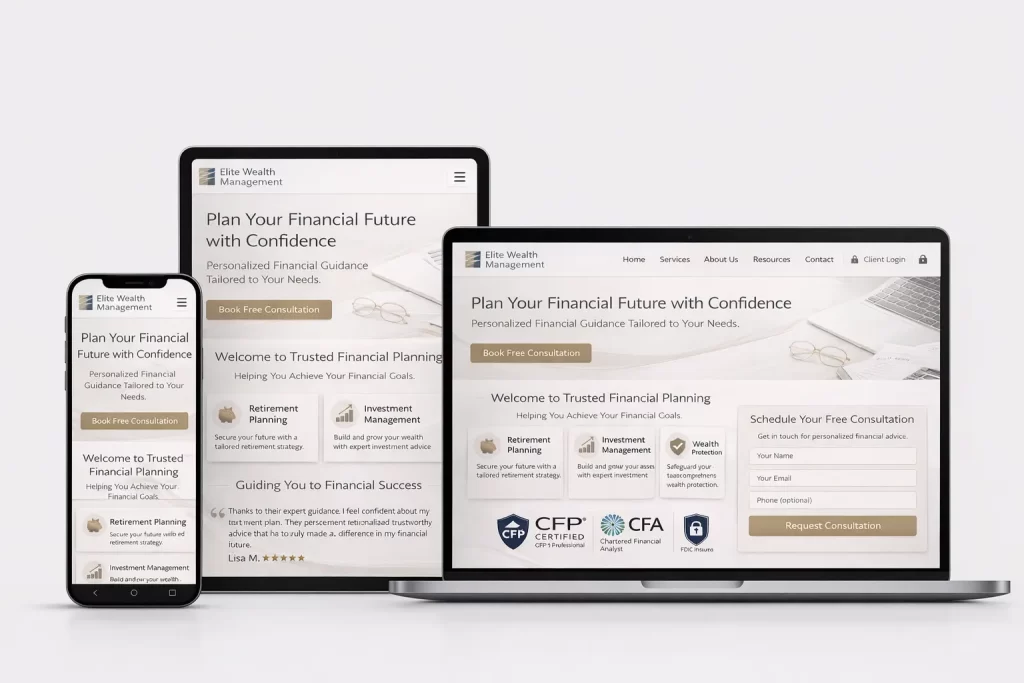
Technology moves fast. A website that was cutting-edge five years ago is likely obsolete today.
Signs Your Finance Website is Outdated
How do you know it is time for a change?
- Poor Mobile Experience: If users have to pinch-and-zoom to read your blog, your site is broken.
- Low Conversions: If you have traffic but no inquiries, your design or messaging is failing to connect.
- Old Branding: If your firm has evolved but your website still uses a logo from 2010, there is a disconnect that confuses prospects.
- Difficult to Update: If you need to call a developer just to fix a typo or upload a newsletter, your CMS (Content Management System) is holding you back.
Website Redesign for Better Trust & Leads
A redesign is not just a facelift; it is a strategic realignment. It allows you to audit your content, improve your site structure, and implement the latest security protocols. If your current site isn’t performing well, exploring professional Website Redesign Services can help modernize your online presence and improve client conversions. A refresh signals to the market that your firm is active, growing, and investing in the client experience.
Choosing the Right Financial Services Website Designer
Not all web designers understand the unique constraints of the financial industry.
Benefits of Hiring a Finance Website Expert
A generalist designer may create a beautiful site that violates SEC marketing rules. A specialist financial services website designer understands the nuances of compliance. They know what “promissory language” to avoid. They understand how to structure disclosures. They also speak the language of wealth management, meaning you won’t have to explain the difference between a fiduciary and a broker-dealer during the design process.
Checklist Before Selecting a Designer or Agency
Before signing a contract, ensure your partner can deliver:
- Portfolio: Do they have experience with firms similar to yours?
- SEO Knowledge: Do they understand how to structure a site for search engines, or do they just focus on visuals?
- Ongoing Support: Will they be available to help with updates and security patches after the site launches?
- Compliance Awareness: Are they familiar with the archiving tools you use (like Smarsh or Global Relay)?
Common Mistakes in Financial Services Website Design
Even with good intentions, many firms fall into common traps.
Outdated Layouts
Using boxy, text-heavy layouts that look like a newspaper from the 90s makes a firm look out of touch. Modern design relies on flow, visuals, and concise copy.
Weak Trust Signals
Hiding the team is a major error. Finance is a people business. If a prospect cannot see who they will be working with, they will not reach out.
Slow Website Speed
High-resolution images that are not optimized can kill site speed. This frustrates users and hurts Google rankings.
No Clear CTA
Leaving the next step ambiguous is a conversion killer. Every page should guide the user toward a specific action, whether it is “Read More,” “Meet the Team,” or “Schedule a Call.”
Not Optimized for SEO
A beautiful site that no one visits is a wasted investment. Failing to conduct keyword research or optimize meta tags means you are invisible to potential clients searching online.
Benefits of Professional Financial Advisor Website Design Services
Investing in professional design yields measurable returns.
More Qualified Leads
By clearly articulating who you serve and what you do, your website acts as a filter. It attracts your ideal clients and repels those who aren’t a fit, saving your sales team time.
Higher Google Rankings
A technically sound, content-rich site is rewarded by search engines. Higher visibility leads to more organic traffic without the perpetual cost of ads.
Stronger Authority
A polished resource center with blogs, whitepapers, and videos positions your firm as a thought leader, not just a service provider.
Better User Trust
Ultimately, professional design reduces the perceived risk for the client. It creates a digital environment that feels safe, professional, and aligned with the high caliber of advice you provide.
Final Thoughts
Your website is your hardest-working employee. It works 24/7, never takes a sick day, and is responsible for making that crucial first impression on your future clients. In an industry built on trust, you cannot afford a digital presence that creates doubt. By focusing on specialized design, compliance, and user experience, you can turn your website into your firm’s most powerful growth asset.
Ready to Build the Best Financial Services Website Design?
Don’t let an outdated website hold your firm back. At SRH Web Agency, we create secure, modern, and conversion-focused websites for financial advisors, planners, and firms. We understand the unique challenges of the financial sector and build digital solutions that build trust and drive results. Contact us today to start your transformation.
