

Your website is often the first impression potential clients have of your business. For B2B companies, this makes design more than just aesthetics—it’s a strategic tool that influences trust, engagement, and revenue.
The modern B2B buyer completes nearly 70% of their purchasing decision before ever speaking to a sales rep. They’re researching solutions, comparing competitors, and evaluating credibility—all on your website. If your site fails to communicate value clearly or guide visitors toward action, you’re losing opportunities before the conversation even starts.
Poor design isn’t just a cosmetic issue. It directly impacts bounce rates, time on site, lead quality, and search engine rankings. Slow load times frustrate users. Confusing navigation sends them to competitors. Weak calls-to-action leave money on the table.
This guide walks through what makes B2B websites different, how to design for conversion, and the key elements that separate high-performing sites from those that underdeliver. You’ll also find practical advice on choosing design partners, following current trends, and tailoring your approach to industries like SaaS and ecommerce.
What Is a B2B Website?
A B2B website serves businesses selling products or services to other businesses rather than individual consumers. These sites focus on longer sales cycles, multiple decision-makers, and educating prospects about complex solutions.
Unlike B2C websites that prioritize emotional appeal and quick purchases, B2B websites emphasize credibility, detailed information, and relationship-building. Visitors often include procurement teams, executives, and technical evaluators—all with different priorities and questions.
This audience expects clarity. They want to understand what you offer, why it matters, and how it solves their specific problems. Design plays a critical role in delivering that information efficiently while building confidence in your brand.
What Makes Good B2B Websites Stand Out

The best B2B websites communicate their value proposition immediately. Within seconds, visitors should understand who you serve, what problem you solve, and why they should care. Vague messaging or generic claims create confusion and drive people away.
User experience matters just as much as messaging. Decision-makers are busy. They don’t have time to dig through cluttered pages or hunt for information. Good B2B websites use intuitive navigation, clear hierarchies, and strategic content placement to make key details easy to find.
Examples of strong B2B websites include companies like Slack, HubSpot, and Shopify. Each site uses clean layouts, benefit-driven copy, and prominent CTAs. They showcase social proof through case studies and testimonials, reinforcing credibility at every touchpoint.
Key Features of the Best B2B Website Designs
The best B2B website designs balance professionalism with modernity. Visual structure should feel polished and trustworthy without appearing outdated or overly formal. Clean typography, consistent branding, and purposeful use of white space help create this impression.
Conversion-focused layouts guide visitors through a logical journey. Homepage hero sections immediately establish value. Service pages expand on benefits and features. Dedicated landing pages target specific buyer personas or pain points. Every element has a clear purpose tied to moving prospects closer to action.
Trust-building components are non-negotiable. Case studies demonstrate proven results. Client testimonials add social proof. Industry certifications and awards signal expertise. Security badges reassure visitors about data protection. These elements work together to reduce hesitation and build confidence in your brand.
Strong CTAs appear throughout the site, strategically placed to capture interest at different stages of the buyer journey. Primary CTAs might invite users to schedule a demo or request a quote. Secondary CTAs offer resources like whitepapers or webinars that nurture leads over time.
Responsive B2B Website Design for Better UX and SEO
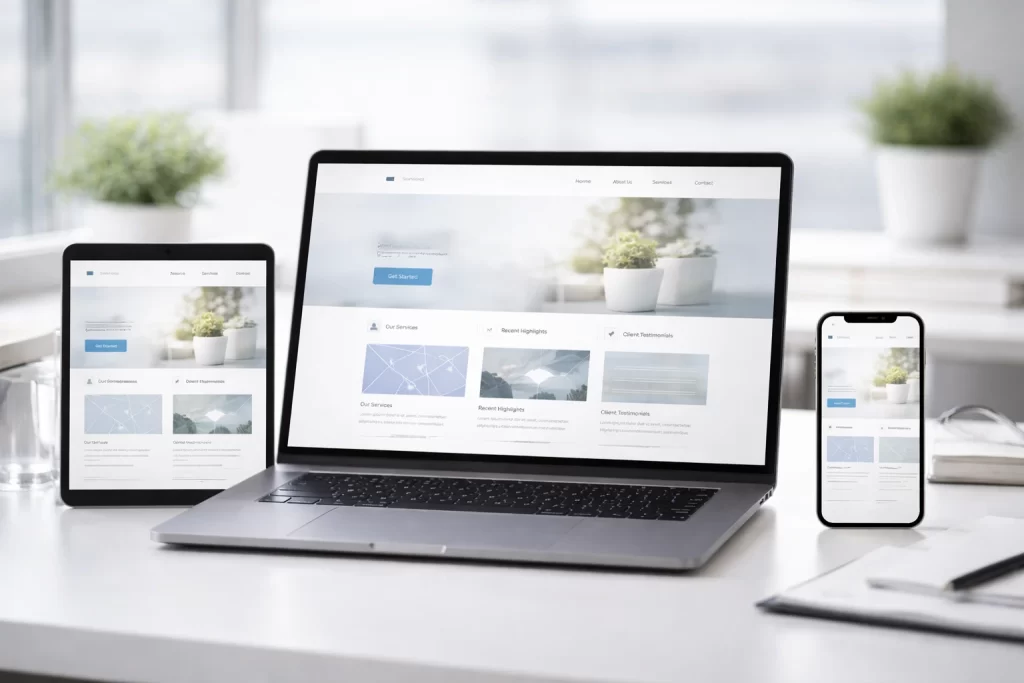
Mobile traffic accounts for over half of all web visits, and B2B buyers increasingly research solutions on smartphones and tablets. Responsive design ensures your site adapts seamlessly to any screen size, delivering consistent experiences across devices.
Google prioritizes mobile-friendly sites in search rankings. If your website doesn’t perform well on mobile, you’re losing visibility and traffic. Responsive design directly improves your SEO by reducing bounce rates, increasing engagement, and meeting search engine standards.
Creating seamless experiences means more than shrinking desktop layouts. Mobile users interact differently—they tap instead of click, scroll vertically, and expect faster load times. Effective responsive design optimizes navigation menus, simplifies forms, and prioritizes content that matters most on smaller screens.
How Poor Design Impacts SEO and Conversion for B2B Websites
Design flaws hurt both user experience and search engine performance. High bounce rates signal to Google that visitors aren’t finding value, which lowers your rankings. Short dwell times suggest your content doesn’t engage or answer questions effectively.
Slow-loading pages frustrate users and damage SEO. Studies show that 53% of mobile users abandon sites that take longer than three seconds to load. Every extra second decreases conversions and increases the likelihood visitors will choose a competitor instead.
Poor UX directly impacts lead generation. Confusing navigation makes it hard for prospects to learn about your solutions. Weak CTAs fail to capture interest. Forms that ask for too much information drive people away. These issues compound over time, costing you qualified leads and revenue.
Latest B2B Website Design Trends Businesses Should Follow
Minimalist UI with strong typography continues to dominate B2B design. Clean layouts reduce cognitive load, making it easier for visitors to focus on your message. Bold, readable fonts enhance clarity and reinforce brand personality without overwhelming the page.
Interactive storytelling and product demos engage users more effectively than static content. Videos, animations, and interactive elements help explain complex solutions in digestible formats. These features keep visitors on your site longer and improve information retention.
AI-driven personalization tailors experiences based on visitor behavior, industry, or company size. Dynamic content adjusts messaging to match specific needs, increasing relevance and conversion rates. While still emerging, this trend offers significant competitive advantages for early adopters.
Trust-focused design systems emphasize transparency and credibility. This includes displaying customer logos prominently, showcasing third-party reviews, and using authentic imagery instead of generic stock photos. B2B buyers value proof over promises, and design should reflect that priority.
Industry-Specific Website Design Approaches
B2B SaaS Website Design Best Practices
B2B SaaS websites prioritize product demonstrations and trial signups. The homepage should clearly communicate the software’s core value and direct users toward experiencing it firsthand through demos or free trials.
Feature-to-benefit storytelling helps visitors understand not just what your software does, but how it solves their specific problems. Avoid technical jargon unless it resonates with your audience. Focus on outcomes like time saved, costs reduced, or efficiency gained.
Product-led growth layouts emphasize self-service options. Include pricing transparency, detailed product tours, and robust help documentation. These elements empower prospects to explore your solution independently, speeding up the sales cycle.
B2B Ecommerce Website Design Essentials
B2B ecommerce requires different functionality than consumer-facing stores. Product catalog structure should accommodate large inventories, complex SKUs, and detailed specifications that purchasing teams need for evaluation.
Bulk ordering and account-based UX features are critical. Allow clients to reorder common items quickly, save shopping lists, and manage multiple user accounts with varying permissions. These capabilities improve efficiency for repeat customers.
Scalable design supports business growth. As your product offerings expand or you enter new markets, your website should adapt without requiring complete rebuilds. Flexible frameworks and modular design systems future-proof your investment.
How to Design a Website for a B2B Business (Step-by-Step Guide)
Start by defining your ideal customer and mapping their buyer journey. Understanding who visits your site and what information they need at each stage helps you create relevant, targeted content. Different personas may require different messaging and resources.
Create a clear value proposition that differentiates your business. What makes your solution better, faster, or more cost-effective than alternatives? This statement should anchor your homepage and inform all subsequent messaging throughout the site.
Build a conversion-focused site structure that guides visitors logically from awareness to action. Organize pages by services, industries, or use cases depending on how your audience searches for solutions. Each page should have a specific goal aligned with the buyer journey.
Add SEO-optimized service and landing pages targeting keywords your prospects search for. These pages should address specific pain points, provide detailed information, and include strong CTAs. Optimize meta titles, descriptions, headers, and image alt text for search engines.
Improve speed, UX, and lead generation continuously. Use analytics to identify where visitors drop off or struggle. Test different CTA placements, form lengths, and content formats. Small improvements compound over time, significantly boosting conversion rates.
How Agencies Design Value Propositions for B2B Websites
Professional agencies begin with thorough market research and competitor analysis. They identify gaps in how competitors position themselves and uncover opportunities to differentiate your brand. This research informs messaging that resonates with your specific audience.
Messaging must speak directly to decision-makers. Executives care about ROI and strategic impact. Technical evaluators need detailed specifications and integration capabilities. Effective value propositions address multiple stakeholder concerns without diluting the core message.
Aligning design with business goals ensures your website supports revenue objectives. Agencies translate abstract goals like “increase qualified leads” into concrete design decisions—optimizing form placement, refining CTA copy, and structuring content to nurture prospects effectively.
How to Design an Amazing B2B Website That Converts
Homepage structure should drive action immediately. Lead with a compelling headline that communicates your value proposition. Follow with concise supporting copy and a prominent CTA above the fold. Use visuals strategically to reinforce your message without distracting from key information.
Strong CTA placement appears throughout the user journey. Primary CTAs invite high-intent actions like scheduling demos or requesting quotes. Secondary CTAs offer resources like guides or case studies that educate prospects who aren’t ready to commit.
Case studies and proof build trust at critical decision points. Feature client success stories prominently on service pages. Include specific metrics and outcomes that demonstrate real-world impact. Video testimonials add authenticity and emotional connection.
Funnel-focused content design addresses questions and objections at each stage. Top-of-funnel content educates about industry challenges. Middle-of-funnel content explains your solution in detail. Bottom-of-funnel content provides pricing, implementation timelines, and support information that helps prospects make final decisions.
Choosing the Right B2B Website Design Company
Look for a professional partner with proven B2B experience. Review their portfolio to see if they’ve worked with similar industries or company sizes. Ask for case studies that demonstrate measurable results, not just attractive designs.
Common mistakes include choosing agencies based solely on price or visual appeal. The cheapest option often lacks strategic depth. Agencies focused only on aesthetics may create beautiful sites that don’t convert. Balance cost with expertise, and prioritize partners who understand both design and business outcomes.
Strategy and design must work together. Great design without strategic thinking creates pretty but ineffective websites. Strong strategy without good design fails to engage visitors. The best partners integrate both disciplines, ensuring your site looks professional while achieving business goals.
Why Work With a B2B Web Design Agency

Agencies combine SEO, UX, and conversion optimization expertise under one roof. This integrated approach ensures all elements support each other rather than working in isolation. Technical SEO improvements boost visibility. UX enhancements keep visitors engaged. Conversion optimization turns traffic into revenue.
Custom design solutions address your unique industry challenges and competitive landscape. Template-based approaches rarely deliver optimal results for B2B businesses with complex offerings. Agencies tailor every aspect of your site to your specific audience and business model.
Long-term website growth support extends beyond launch. Markets evolve, competitors adapt, and buyer expectations change. Ongoing partnership with an agency ensures your website continues performing as your business scales and market conditions shift.
Ready to Upgrade Your B2B Website Design?
Strong website design isn’t an expense—it’s an investment in growth. Every improvement to messaging, user experience, or conversion strategy directly impacts your bottom line. Companies that prioritize website performance gain competitive advantages that compound over time.
Modern B2B buyers expect seamless digital experiences that educate, engage, and inspire confidence. Your website must deliver on these expectations while supporting your sales team and marketing efforts. When done right, great design becomes your most effective sales tool.
If your website isn’t generating the leads or conversions you need, it’s time to rethink your approach. Professional redesign focused on performance can transform results. Our team specializes in website design that combines strategic thinking with conversion-focused execution. We help businesses build sites that don’t just look good—they drive measurable growth.
Ready to see what’s possible? Let’s talk about how we can elevate your website and support your business goals.
Frequently Asked Questions
How to design a B2B website that generates leads?
Focus on clear messaging, strong CTAs, and trust-building elements. Your homepage should immediately communicate value and guide visitors toward lead capture points like demo requests or contact forms. Use case studies and testimonials to build credibility. Optimize page speed and mobile experience to reduce friction. Test different CTA placements and form lengths to improve conversion rates over time.
How does poor design impact SEO and conversion for B2B websites?
Poor design increases bounce rates and reduces dwell time, signaling to search engines that your content isn’t valuable. This lowers rankings and visibility. Slow load times frustrate users and hurt SEO performance. Confusing navigation and weak CTAs prevent visitors from converting, wasting traffic that could have generated leads. These issues compound, costing businesses both search visibility and revenue.
How do agencies design value propositions for B2B websites?
Agencies start with market research and competitor analysis to identify differentiation opportunities. They develop messaging that speaks to decision-makers’ priorities—ROI for executives, technical details for evaluators. Value propositions are tested and refined based on user feedback and analytics. The final messaging aligns with business goals and resonates with your specific audience.
How to design a website for a B2B business?
Begin by defining your ideal customer and their buyer journey. Create a clear value proposition and site structure that guides visitors logically. Add SEO-optimized pages targeting relevant keywords. Include trust signals like case studies and testimonials. Optimize for mobile devices and page speed. Continuously improve based on analytics and user behavior to maximize conversions.
How to design an amazing B2B website?
Combine professional visual design with conversion-focused strategy. Use clear messaging that immediately communicates value. Structure content around the buyer journey, addressing questions at each stage. Include strong CTAs throughout the site. Showcase social proof and case studies to build trust. Ensure fast load times and seamless mobile experiences. Test and optimize continuously to improve performance over time.