

The industrial sector is undergoing a massive digital transformation. Factories are smarter, supply chains are automated, and procurement processes have moved almost entirely online. Yet, despite these advancements, many manufacturing and engineering firms still treat their online presence as an afterthought.
In 2026, a static brochure site no longer cuts it. industrial website development and branding has become a critical component of business strategy. Why? The modern B2B buyer is younger, tech-savvy, and prefers to do their own research before ever speaking to a sales representative. If your digital storefront is clunky, slow, or outdated, you risk losing credibility instantly.
Modern websites for the industry do more than just list products; they build trust, educate potential buyers, and function as 24/7 lead generation machines. This guide explores the essential best practices for industrial website design in 2026 to help your business stay competitive in a digital-first market.

What Is Industrial Website Design?
At its core, industrial website design refers to the specialized creation of digital platforms for B2B companies in manufacturing, engineering, construction, and distribution sectors. Unlike consumer-facing sites that often rely on emotional impulse buys, an industrial design website must focus on utility, technical clarity, and long sales cycles.
What sets an industrial design website apart from a standard corporate site is the complexity of information it must convey. These sites often need to organize thousands of SKUs, provide downloadable CAD files, host detailed technical data sheets, and explain complex custom capabilities—all while remaining user-friendly.
Businesses that require professional websites for industry typically include:
- OEMs (Original Equipment Manufacturers)
- Industrial distributors
- Custom fabrication shops
- Engineering service providers
- Material suppliers
For these companies, the website is often the primary bridge between a technical problem a buyer has and the engineering solution the company offers.
Why Industrial Website Development Matters in 2026
The days of relying solely on trade shows and rolodexes are over. Strategic industrial website development supports long-term growth by aligning your business with how procurement actually happens today.
B2B buyers in 2026 operate with a digital-first mindset. Recent data suggests that the vast majority of the buying journey happens anonymously online. By the time a prospect contacts your team, they have likely already compared your specifications against three of your competitors.
Your website acts as a 24/7 sales tool. It qualifies leads by providing the necessary technical data upfront, and it disqualifies those who aren’t a good fit, saving your sales team valuable time. A robust industrial online presence ensures that when a procurement manager searches for a specific component at 3 PM on a Tuesday or an engineer looks for a solution at 2 AM on a Sunday, your company is there to answer the call.
Understanding the Buyer Journey for Websites for Industry
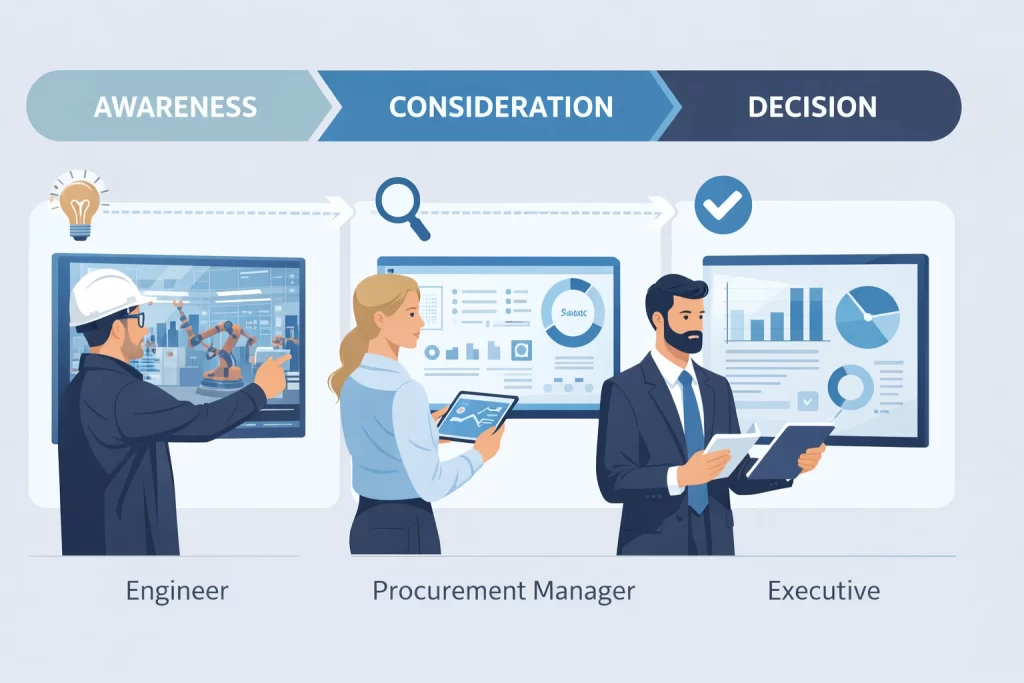
To design effectively, you must understand who you are designing for. The user journey on websites for industry is distinct because it involves multiple stakeholders—engineers, procurement managers, and C-suite executives—each with different needs.
Awareness Stage
Here, the buyer has a problem but might not know the solution. They are searching for terms like “how to increase corrosion resistance” or “reducing downtime in assembly lines.” A strategic industrial website design captures this traffic through educational blog content and problem-solving landing pages.
Consideration Stage
The buyer knows they need a specific type of solution (e.g., “316 stainless steel valves”). They are now comparing vendors. They need easy access to specs, certifications (ISO, AS9100), and capacity details. If this information is buried, they will move on.
Decision Stage
The buyer is ready to select a partner. At this point, trust signals, case studies, and easy-to-use “Request a Quote” forms are paramount. A well-structured industrial design website removes friction here to ensure the lead converts.
Best Practices for Industrial Website Design in 2026
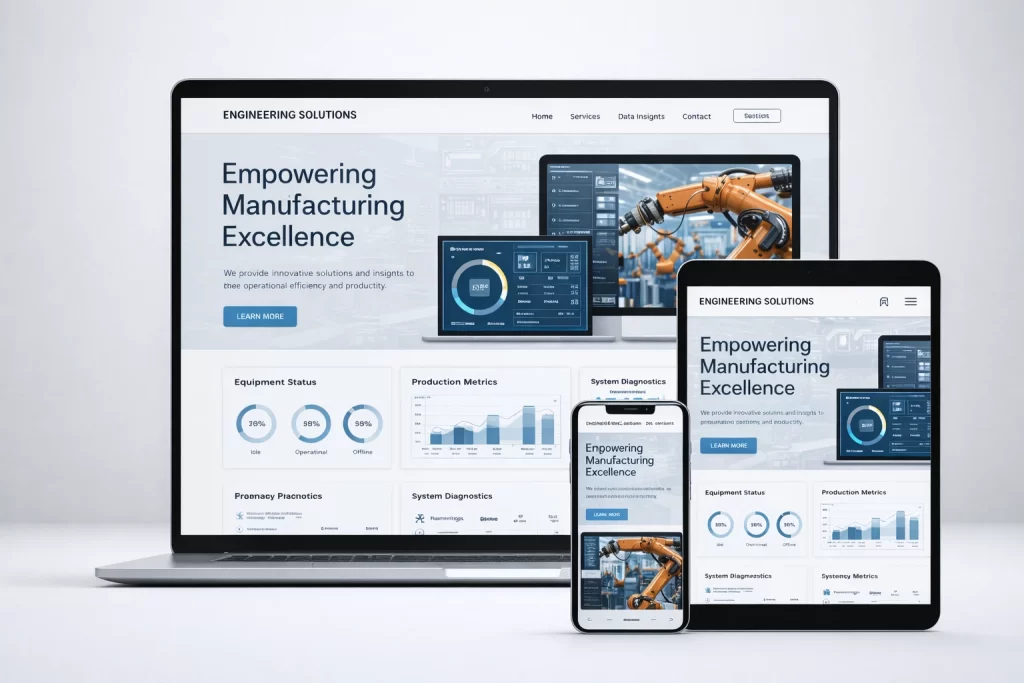
Creating a high-performing digital asset requires adhering to specific standards. Here are the core best practices for industrial website design that will define success in 2026.
5.1 Mobile-First Approach in Industrial Website Design
It is a common misconception that industrial buyers only work from desktop computers. In reality, plant managers, field engineers, and on-site contractors frequently use tablets and smartphones to look up parts or specifications. Industrial website design must be fully responsive, ensuring that complex data tables and product catalogs are legible on small screens.
5.2 Simple Navigation for Industrial Design Websites
Complex capabilities should not lead to complex navigation. The “three-click rule” is vital here: users should be able to find any piece of information within three clicks. An effective homepage design best practices 2026 uses clear, descriptive menu labels (e.g., “Custom Injection Molding” instead of “Services”) and offers intuitive search functionality to help users navigate extensive product libraries.
5.3 Clear Messaging for High-Converting Websites for Industry
Industrial companies often struggle with jargon. While technical accuracy is crucial, the value proposition must be clear immediately. Within seconds of landing on your homepage, a visitor should know what you do, who you serve, and why you are the best choice. High-converting websites for industry avoid fluff and focus on direct, capability-focused headlines.
5.4 Conversion Optimization in Industrial Website Development
Traffic is useless if it doesn’t convert. Effective best practices for industrial website design builds conversion points into every page. This goes beyond a “Contact Us” page. It includes strategically placed “Request a Quote” buttons, newsletter signups for industry insights, and gated content like white papers that capture lead data in exchange for valuable information.
5.5 Technical SEO Best Practices for Industrial Website Design
Search engines need to understand what you manufacture to rank you correctly. This involves proper schema markup for products, fast loading speeds (Core Web Vitals), and a secure HTTPS connection. Technical SEO is the foundation of visibility; without it, even the most beautiful industrial website design will remain unseen.
5.6 Trust Signals Every Industrial Design Website Needs
In the B2B world, risk mitigation is a huge factor. Buyers need to know you are reliable. Your site must prominently display ISO certifications, safety awards, association memberships, and client testimonials. These trust signals validate your claims and reassure potential partners.
5.7 Visual Branding for Professional Websites for Industry
Industrial doesn’t have to mean ugly. High-quality photography of your facility, your team, and your finished products makes a massive difference. Avoid generic stock photos of people in hard hats. Authentic imagery helps humanize a B2B company and distinguishes professional websites for industry from fly-by-night competitors.
Essential Features of a High-Performing Industrial Design Website
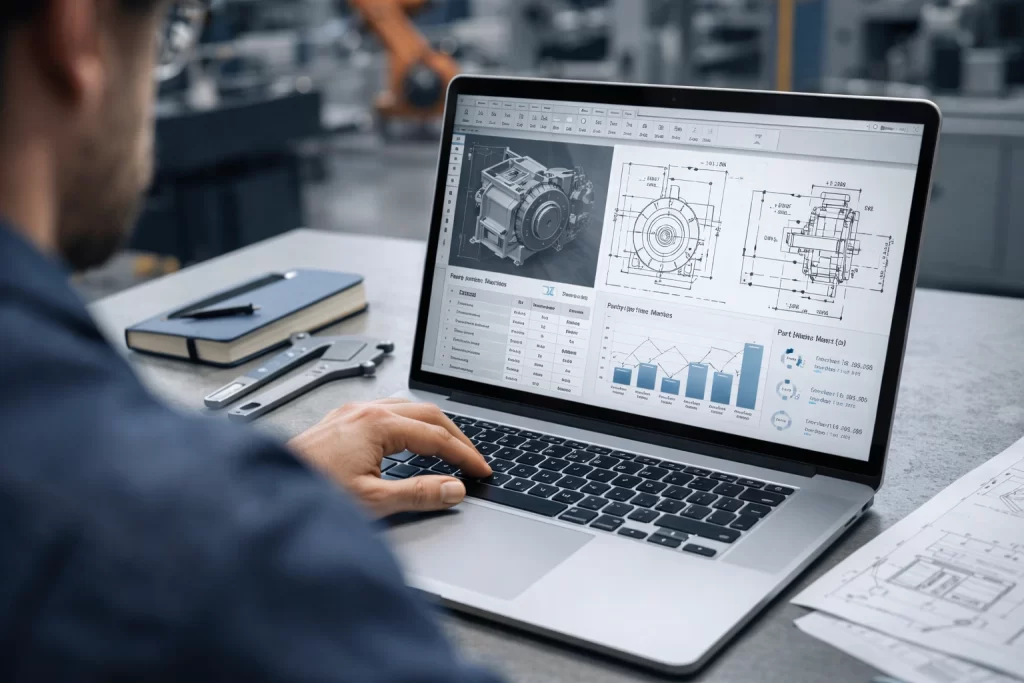
To implement the best practices for industrial website design effectively, your site requires specific features tailored to the sector.
SEO-Optimized Service Pages
Each core capability (e.g., “CNC Machining,” “Metal Stamping”) needs its own dedicated page. This allows you to go deep into detail and rank for specific, high-intent keywords.
Blog for Authority
A consistent blog supports industrial website development by signaling to search engines that your site is active and relevant. It also establishes your engineers and leaders as subject matter experts.
Downloadable Catalogs and CAD Files
Engineers often need to drop a component into their design to see if it fits. Providing downloadable CAD files is one of the highest-value features you can offer, often securing your part’s place in the final bill of materials (BOM).
Quote Request Forms
Generic contact forms are often insufficient. An interactive Request for Quote (RFQ) tool that allows users to upload drawings and specify quantities streamlines the sales process.
Case Studies
Show, don’t just tell. Detailed case studies that explain the “Problem, Solution, and Result” of past projects prove your competency and help prospects visualize how you can solve their unique challenges.
Optimized Structure for Websites for Industry
The site hierarchy should mirror your business model. If you serve distinct industries (Aerospace vs. Medical), consider organizing navigation by “Industries Served” to guide users to the most relevant content quickly.
Common Mistakes in Industrial Website Design
Even with good intentions, many companies fall into common traps during the build process.
Poor Structure
Adding pages randomly over time results in a “Frankenstein” site. Without a logical architecture, search engines struggle to crawl the site, and users struggle to find products.
Ignoring SEO During Industrial Website Development
Building a site and then thinking about SEO is a recipe for failure. Keywords, URL structures, and meta data must be planned before a single line of code is written.
Weak Mobile UX
As mentioned, ignoring mobile users alienates a significant portion of the workforce. If a procurement manager can’t read your specs on their phone while walking the factory floor, they will find a competitor whose site works.
Confusing Layouts in Industrial Design Websites
Trying to be too “creative” with navigation can backfire. B2B buyers value predictability and efficiency over avant-garde design. Stick to standard layouts that users intuitively understand.
How Industrial Website Development Drives Leads and Growth
Investing in professional web development is an investment in your sales pipeline. Optimized websites for industry generate inbound leads that are often higher quality than outbound cold calls because the prospect is actively seeking a solution.
SEO plays the long game here. By ranking for terms related to your specific manufacturing capabilities, you ensure a steady stream of traffic that grows over time. Unlike paid ads, which stop working the moment you stop paying, organic rank provides compounding returns.
Furthermore, professional industrial website design improves conversion rates. A fast, secure, and professional-looking site reduces bounce rates and encourages visitors to engage, turning passive traffic into active opportunities.
Future Trends in Industrial Website Development (2026 & Beyond)
As we look toward the future, the landscape of industrial website development continues to evolve.
AI-Powered Experiences
Expect to see more AI chatbots that can answer complex technical questions or guide engineers to the correct part number based on vague descriptions.
Smarter Industrial Design Websites
Websites will become more personalized. Using IP tracking, a site might recognize a visitor is from the automotive sector and dynamically change the homepage banner to show automotive case studies.
Personalization for Websites for Industry
Customer portals will become standard, allowing existing clients to log in, view past orders, reorder with one click, and track shipments in real-time.
Automation Features
Integration with ERP and CRM systems will deepen. A quote request on the website will automatically populate in the sales team’s CRM, triggering an automated email sequence to nurture the lead.
Final Thoughts on Industrial Website Design
The standards for B2B digital presence have risen. Implementing the best practices for industrial website design is no longer optional—it is a requirement for survival and growth.
From mobile responsiveness to technical SEO, every element of strategic industrial website development works together to build credibility and drive revenue. By viewing your website as a dynamic business asset rather than a static digital brochure, you position your company to capture the modern buyer.
Businesses that refuse to adapt risk obsolescence, while those that embrace these changes will dominate their respective markets. Now is the time to audit your current presence and commit to improving your websites for industry.
Partner With Experts in Industrial Web Development
Many manufacturing companies struggle to gain traction online because they rely on generalist agencies that don’t understand the nuances of B2B manufacturing.
We specialize in industrial website development. We understand that you aren’t just selling a widget; you are selling precision, capacity, and reliability. Our team builds SEO-focused industrial design websites that speak the language of engineers and procurement managers alike.
If you are ready to transform your digital presence into a growth engine, SRH Web Agency can help. We create high-converting websites for the industry designed to generate qualified leads and measurable ROI. Contact us today for a consultation or a comprehensive audit of your current site.
