
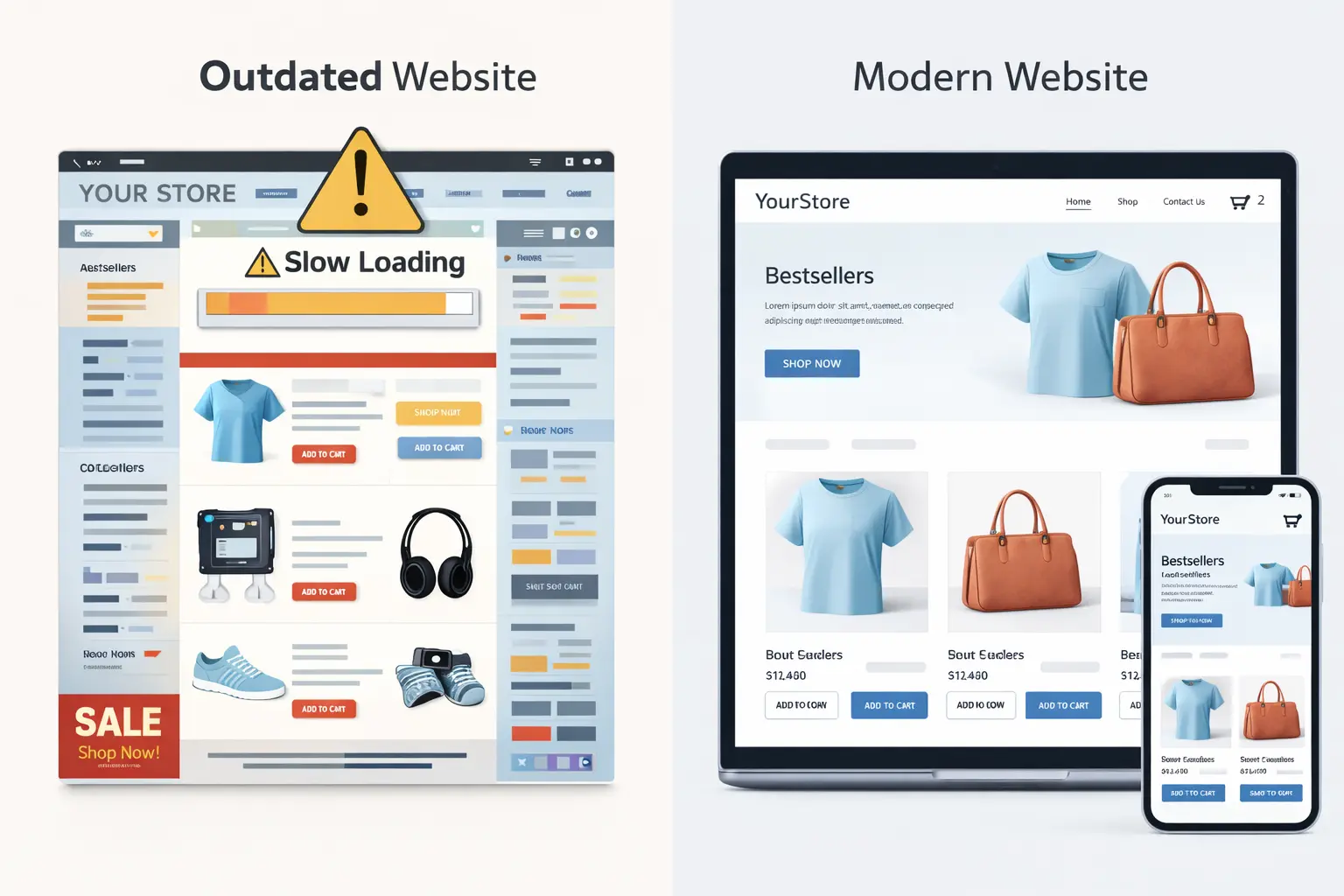
In the digital marketplace, your website isn’t just a storefront—it’s your best salesperson. It works 24/7, greets every customer, and closes deals without taking a coffee break. But what happens when that salesperson starts looking disheveled, forgets product details, or moves too slowly? You lose money.
The ecommerce landscape shifts constantly. Consumer expectations for speed, aesthetics, and usability are higher than ever. If your online store feels clunky or outdated, visitors won’t hesitate to click away to a competitor. This reality makes an ecommerce website redesign not just a cosmetic luxury, but a critical business strategy.
Poor user experience (UX) is a silent revenue killer. It frustrates potential buyers and erodes trust in your brand. In this guide, we will walk you through everything you need to know about revitalizing your online presence. From identifying the warning signs to executing a flawless launch, you will learn how to turn your website into a high-converting powerhouse.
What Is Ecommerce Website Redesign?
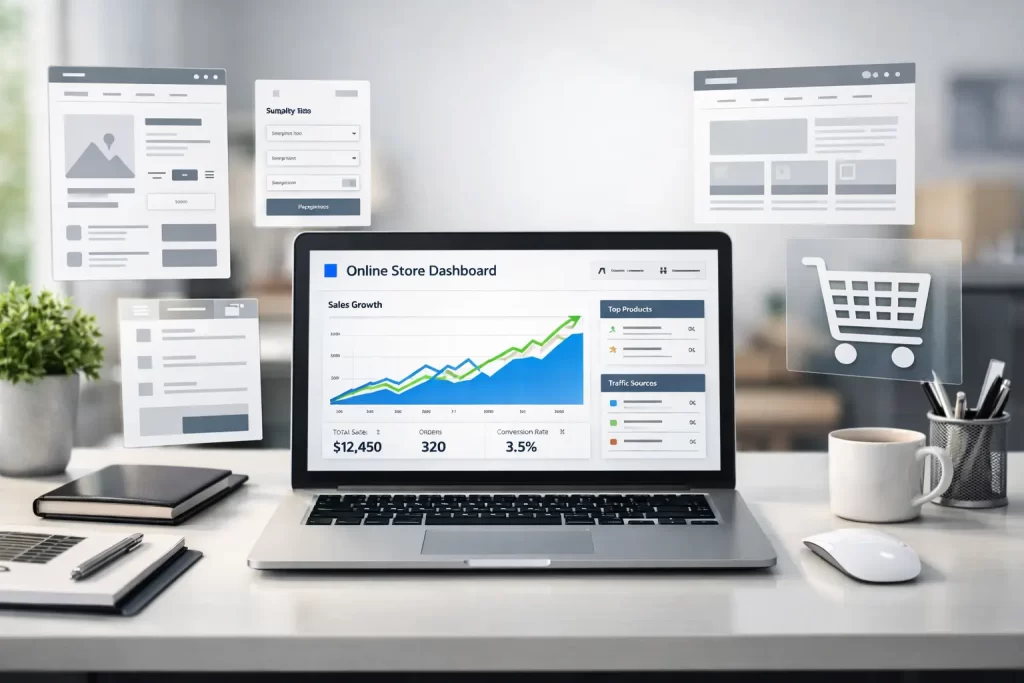
Many people hear “redesign” and think of a fresh coat of paint—new colors, a different logo, or updated fonts. While visual appeal is important, a true ecommerce website redesign goes much deeper. It is a comprehensive overhaul of how your site functions, feels, and performs.
A successful redesign addresses the core pillars of a digital business:
- User Experience (UX): How easy and enjoyable it is for a customer to browse and buy.
- User Interface (UI): The visual elements that guide the user through the site.
- Performance: Loading speeds and technical stability.
- SEO: ensuring search engines can crawl, index, and rank your products effectively.
- Conversion Rate Optimization (CRO): Strategic changes designed to turn visitors into paying customers.
Think of it as renovating a house versus just painting the walls. A minor update might change the curtains, but a redesign knocks down walls to create an open floor plan, upgrades the plumbing, and reinforces the foundation.
Signs Your Store Needs an Ecommerce Website Redesign
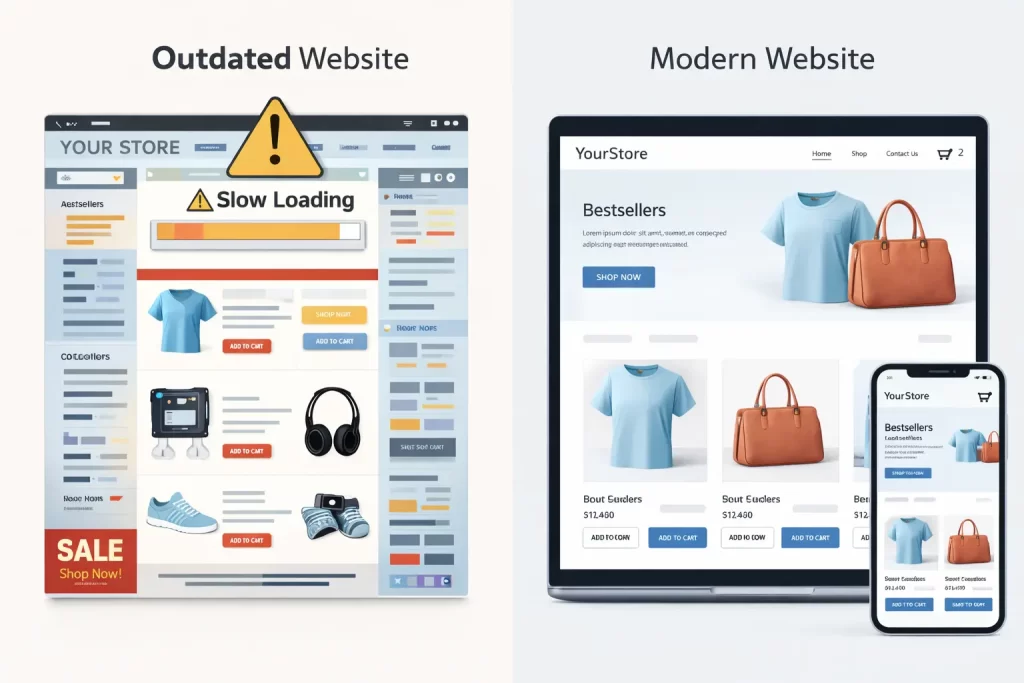
How do you know when it’s time to pull the trigger on a redesign? Your website will usually tell you, often through data. Here are the red flags indicating that your current setup is holding you back.
- Low Conversion Rates: If you are driving traffic to your site but sales are stagnant or dropping, your design might be the bottleneck. A confusing layout or lack of trust signals can stop a purchase in its tracks.
- High Bounce Rate: A high bounce rate means visitors land on your site and leave immediately without interacting. This usually signals that your site is unattractive, irrelevant, or too difficult to use.
- Poor Mobile Experience: Mobile commerce (m-commerce) dominates online shopping. If your site requires pinching and zooming, or if buttons are too small for thumbs, you are alienating a massive portion of your audience.
- Slow Loading Speed: Modern shoppers are impatient. If your pages take more than three seconds to load, you are losing potential customers. A redesign can clean up bloated code and optimize images for speed.
- Outdated Design: Trends change. A site that looked cutting-edge five years ago may look suspicious or amateur today. If your competitor’s site looks like an Apple store and yours looks like a garage sale, trust will plummet.
- Checkout Abandonment: This is the most painful metric. If customers fill their carts but leave at the payment stage, your checkout process is likely too long, complicated, or glitchy.
- Difficult Navigation: If a user can’t find what they are looking for in three clicks or less, they will likely give up. Complex menus and poor search functionality are major drivers of site abandonment.
Benefits of Professional Ecommerce Website Redesign Services
Investing in a redesign is a significant decision, but the return on investment (ROI) can be substantial. Here is why businesses choose to partner with experts for ecommerce website redesign services.
Better User Experience
Professionals understand user psychology. They build intuitive pathways that guide visitors effortlessly from the homepage to the “Thank You” page.
Higher Trust and Credibility
A polished, professional look signals that your business is legitimate and secure. This is crucial when asking strangers to enter their credit card information.
Improved SEO Performance
A redesign is the perfect time to fix technical SEO issues. A cleaner site structure and optimized code help Google understand your content, leading to better rankings.
Increased Conversion Rate
By removing friction points and using psychological triggers, a strategic redesign focuses entirely on getting more users to hit “Buy Now.”
Faster Website Speed
Agencies have the technical know-how to implement advanced caching, content delivery networks (CDNs), and code minification to make your site fly.
Better Scalability
Your business plans to grow, and your website should be able to handle it. A redesign ensures your platform can support more products, more traffic, and new features in the future.
Best Practices for Ecommerce Website Redesign
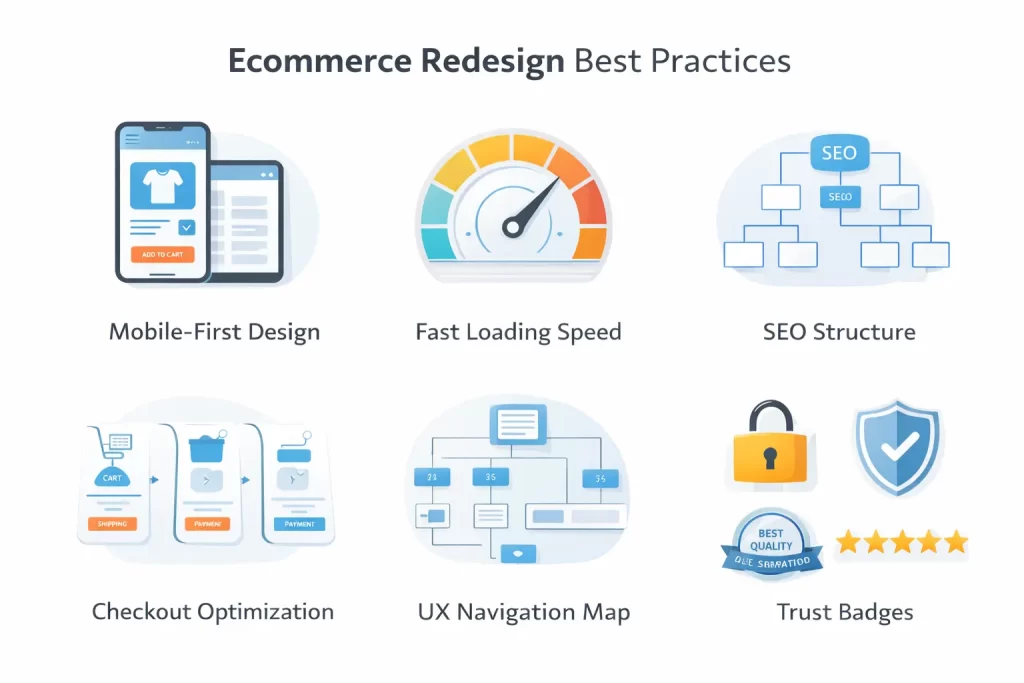
To ensure your project succeeds, you need to follow industry standards. Here are the best practices for ecommerce website redesign that yield results.
Mobile-First Design
Don’t just make your desktop site responsive; design for mobile first. Prioritize vertical scrolling, touch-friendly buttons, and simplified menus.
UX-Focused Navigation
Use clear, descriptive categories. Implement “mega menus” for large inventories and ensure your search bar is prominent and intelligent (offering auto-suggestions).
Clear Product Pages
Your product page is your pitch. It needs high-quality images, concise descriptions, clear pricing, and obvious “Add to Cart” buttons. Don’t hide shipping costs or return policies.
Optimized Checkout Process
The goal is friction reduction. Allow guest checkout (no account required), offer multiple payment options (credit card, PayPal, Apple Pay), and use a progress bar so users know how many steps remain.
Fast Loading Speed
Compress every image. Use lazy loading so images only appear as the user scrolls down. Minimize the use of heavy scripts and plugins that drag down performance.
SEO-Friendly Site Structure
Ensure your URLs are clean and descriptive. Use breadcrumbs to help users and search engines navigate. properly map out redirects (301s) so you don’t lose traffic from old pages.
Strong CTAs and Trust Signals
Your Call to Action (CTA) buttons should use contrasting colors and action-oriented text (e.g., “Get Yours Now” vs. “Submit”). Display security badges, customer reviews, and guarantees prominently.
Consistent Branding
Your fonts, colors, and tone of voice should remain consistent across every page. This builds brand recognition and professional authority.
Data-Driven Redesign Decisions
Never guess. Use heatmaps to see where users click and scroll. Analyze Google Analytics to see where users drop off. innovative design should solve specific problems revealed by data.
Step-by-Step Process: How to Redesign an Ecommerce Website
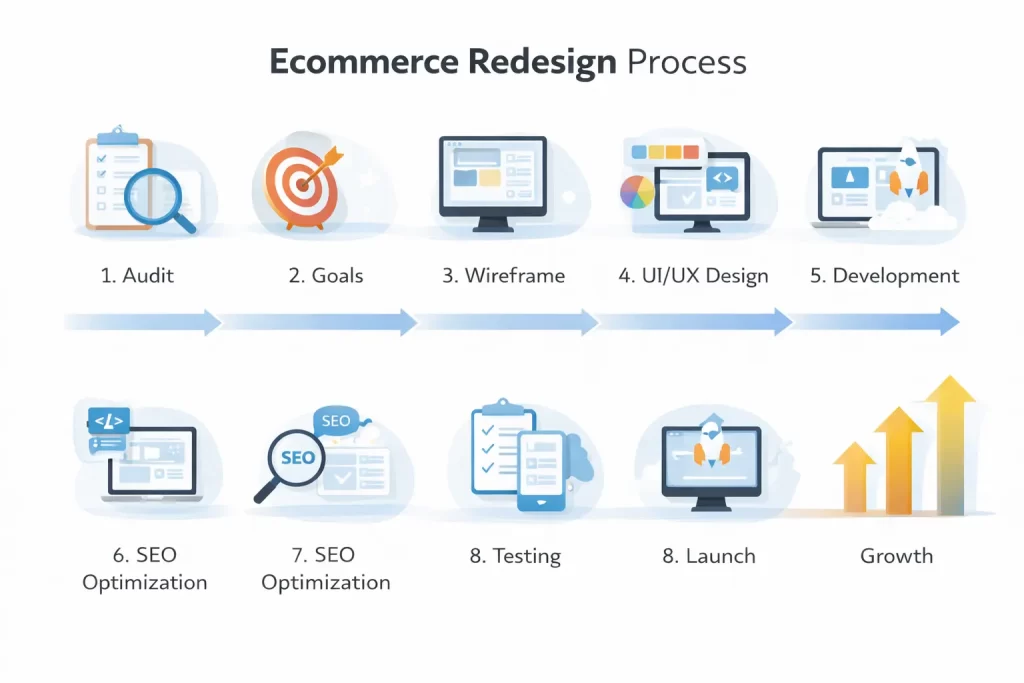
A redesign is a complex project with many moving parts. Breaking it down into manageable stages prevents overwhelm and ensures nothing is missed. This process also answers the common question: how to redesign ecommerce website effectively?
1. Audit Your Current Website
Before you build the new, you must understand the old. Identify what is working (high-traffic pages) and what isn’t (broken links, slow pages).
2. Define Goals and KPIs
What are you trying to achieve? Be specific. “Look better” is not a goal. “Increase mobile conversion rate by 20%” is a goal.
3. Analyze Customer Behavior
Who are your customers? Create user personas. Understand their pain points and what motivates them to buy.
4. Create Wireframes and Structure
Map out the skeleton of your new site without colors or images. This focuses the conversation on layout and functionality rather than aesthetics.
5. Redesign UI/UX
This is where the visual magic happens. Designers apply your brand guidelines to the wireframes, creating high-fidelity mockups.
6. Optimize for SEO
Write new meta titles and descriptions. Ensure all images have alt text. Set up your 301 redirects to preserve your search rankings.
7. Test Before Launch
QA (Quality Assurance) is vital. Test the site on different browsers (Chrome, Safari) and devices (iPhone, Android, Tablet). click every button and place test orders.
8. Monitor Performance After Launch
The work isn’t done when you go live. Monitor your analytics closely for the first few weeks to catch any bugs and ensure traffic is holding steady.
Common Ecommerce Website Redesign Mistakes to Avoid
Even well-intentioned projects can go off the rails. Watch out for these pitfalls.
- Redesigning Without Data: Basing decisions on “I think this looks cool” rather than “Customers are clicking here” is a recipe for disaster.
- Ignoring Mobile Users: Designing a beautiful desktop site that is unusable on a phone will kill your sales.
- Complicated Navigation: If users have to guess where to find products, they will leave. Keep it simple.
- Removing High-Performing Pages: Be careful not to accidentally delete or drastically change pages that are already bringing in traffic and revenue.
- Not Testing Before Launch: Launching a site with broken checkout links is a nightmare scenario. Test everything twice.
- Forgetting SEO: If you change your URL structure without setting up redirects, your traffic will drop to zero overnight.
Ecommerce Website Redesign Checklist
Keep this checklist handy to ensure you cover all your bases:
- Technical SEO Audit: Check for crawl errors and broken links.
- Speed Optimization: Ensure the site loads in under 3 seconds.
- UX Review: Is the navigation intuitive?
- Mobile Responsiveness: Does it work perfectly on phones?
- CRO Improvements: Are CTAs clear and compelling?
- Analytics Tracking: Is Google Analytics 4 (GA4) installed correctly?
- Security: Is the SSL certificate active? Are trust badges visible?
E-commerce website redesign is the process of upgrading an existing online store to improve its design, functionality, and overall shopping experience. As customer expectations and digital trends continue to evolve, an outdated website can negatively impact user engagement and sales. A well-planned redesign focuses on modern design elements, intuitive navigation, and mobile responsiveness to ensure customers can easily browse products and interact with your store without friction.
In addition to improving usability, e-commerce website redesign plays a crucial role in increasing conversions and revenue. By optimizing product pages, streamlining the checkout process, and enhancing website speed, businesses can reduce cart abandonment and encourage more purchases. A strategic redesign strengthens your brand and keeps your online store competitive for long-term growth.
When Should You Hire Ecommerce Website Redesign Services?
Some business owners attempt a DIY redesign using drag-and-drop builders. While cost-effective for hobbyists, this approach rarely works for scaling businesses.
DIY vs. Professional Approach:
DIY saves money upfront but costs time and potentially lost revenue due to amateur mistakes. Professional agencies bring a team of experts—designers, developers, and SEO strategists—who ensure the site is built to sell.
When Expert Help Becomes Necessary:
If you have a large inventory, need custom functionality, or rely on organic search traffic, you need an expert. If your annual revenue depends on your site’s performance, a professional redesign is an investment, not an expense. Agencies add ROI by building a system that converts traffic into cash more efficiently than you could on your own.
Elevate Your Online Store
Executing a redesign is a massive undertaking. It requires a blend of creative flair, technical precision, and marketing strategy. If you are ready to transform your online presence, you don’t have to do it alone.
Our team specializes in ecommerce website development services. We don’t just build pretty websites; we build high-performance sales engines tailored to your unique business goals. From strategy to launch, we handle the heavy lifting so you can focus on running your business.
We have helped countless brands navigate the redesign process, resulting in faster load times, higher rankings, and increased revenue. Let us help you build a store that your customers love.
FAQs
How to redesign ecommerce website?
Redesigning an ecommerce website involves auditing your current site, setting clear goals, analyzing customer data, creating a new structure (wireframing), designing the interface (UI/UX), developing the site, optimizing for SEO, and rigorously testing before launch.
How long does ecommerce redesign take?
The timeline varies based on complexity. A basic redesign might take 2-3 months, while a complex site with custom integrations and large inventories can take 4-6 months or longer.
How much does ecommerce website redesign cost?
Costs range significantly. A small business might spend $5,000–$15,000, while enterprise-level redesigns can range from $30,000 to over $100,000 depending on the agency and required features.
Will redesign affect SEO?
It can, positively or negatively. If handled correctly (mapping 301 redirects, preserving content, improving speed), SEO should improve. If neglected, you can lose rankings.
How often should ecommerce sites be redesigned?
Generally, a major redesign is recommended every 3–5 years to keep up with design trends and technology. However, iterative improvements should happen constantly.
Make Your Move
Your website is the heart of your ecommerce business. If it is struggling to keep up with customer demands, your bottom line will suffer. A strategic redesign is the most effective way to breathe new life into your brand, improve customer satisfaction, and drive sustainable growth.
Don’t let an outdated site hold you back. Review your metrics, check the warning signs, and take the necessary steps to build a digital experience that converts.
